
Mapeo de la Horticultura Climáticamente Inteligente: Un análisis bibliométrico y trayectorias emergentes de investigación
Palabras clave:
horticultura, sostenibilidad, cambio climático, mejora genéticaResumen
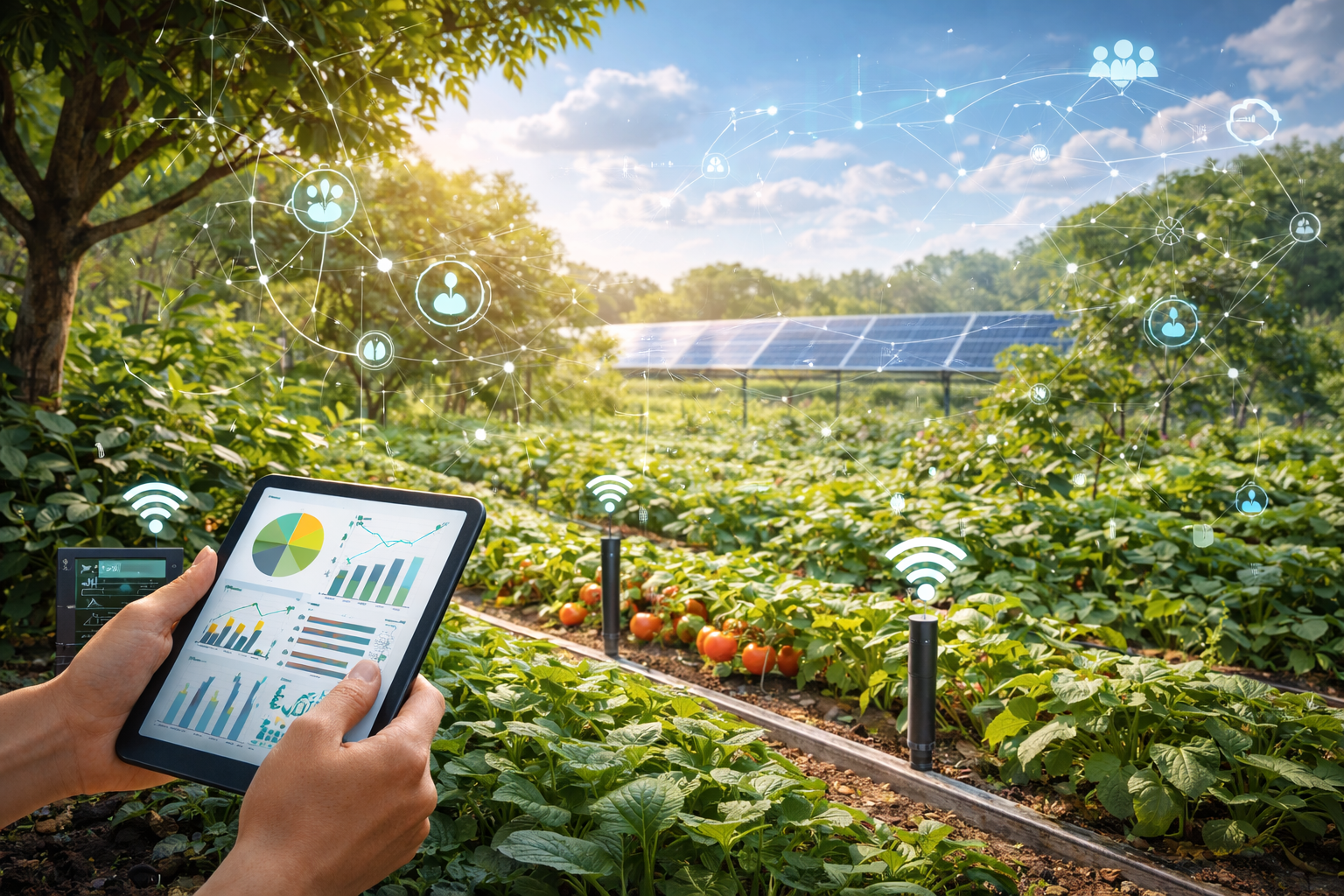
La investigación en horticultura se centra en la adaptación y optimización de los sistemas de producción ante los retos globales, entre ellos el cambio climático y la creciente demanda de alimentos. Los estudios emplean métodos diversos, que van desde la mejora genética asistida por tecnologías ómicas y la optimización de la nutrición de cultivos mediante fertirrigación de precisión, hasta la adopción de prácticas sostenibles, como el uso de bioplásticos y el reciclaje. Se han logrado avances notables en el desarrollo de cultivos más resilientes al estrés abiótico, la gestión eficiente de recursos hídricos y nutrientes, el control biológico de plagas, y la incorporación de la robótica y la nanotecnología. Estos hallazgos impulsan una horticultura más productiva, sostenible y adaptable, y sientan las bases para la seguridad alimentaria y la protección ambiental a escala mundial.
Descargas
Referencias
Abbott, J. D. (1999). Future horticultural research needs, direction, and opportunities: Crop protection industry perspective [Review]. Acta Horticulturae, 495, 467-473. https://doi.org/10.17660/actahortic.1999.495.34
Abdelrahman, M., Rabie, R., El-sayed, M., & Shigyo, M. (2023). Metabolomics and Cytoplasmic Genomics of Allium. En Compendium of Crop Genome Designing for Nutraceuticals (pp. 1-27). Springer, Singapore. https://doi.org/10.1007/978-981-19-3627-2_52-1
Abebe, A. M., Kim, Y., Kim, J., Kim, S. L., & Baek, J. (2023). Image-Based High-Throughput Phenotyping in Horticultural Crops [Review]. Plants, 12(10). https://doi.org/10.3390/plants12102061
Agrimonti, C., Lauro, M., & Visioli, G. (2021). Smart agriculture for food quality: facing climate change in the 21st century. Critical Reviews in Food Science and Nutrition, 61(6), 971-981. https://doi.org/10.1080/10408398.2020.1749555
Al-babili, S., & Singh, S. (2022). Omics in horticultural crops [Book chapter]. Omics in Horticultural Crops, 1-13. https://doi.org/10.1016/B978-0-323-89905-5.00007-1
Ardali, T. R., Soleimanpour, L., Ma’mani, L., & Chorom, M. (2024). Opportunities and Future Perspective of Nanofertilizers and Controlled Release Nanofertilizers in Agriculture [Article]. Journal of Water and Environmental Nanotechnology, 9(2), 223-247. https://doi.org/10.22090/jwent.2024.02.08
Belmonte-Ureña, L., Garrido-Cardenas, J. A., & Camacho‐Ferre, F. (2020). Analysis of World Research on Grafting in Horticultural Plants. HortScience. https://doi.org/10.21273/hortsci14533-19
Bertaccini, A., Oshima, K., Kube, M., & Rao, G. P. (2019). Phytoplasmas: Plant Pathogenic Bacteria - III: Genomics, Host Pathogen Interactions and Diagnosis [Book]. En Phytoplasmas: Plant Pathogenic Bacteria - III: Genomics, Host Pathogen Interactions and Diagnosis (pp. 1-226). Springer Singapore. https://doi.org/10.1007/978-981-13-9632-8
Blanke, M. M. (2023). Advances in the Sustainable Use of Plastics in Horticulture—Perspectives, Innovations, Opportunities, and Limitations [Review]. Sustainability (Switzerland), 15(15). https://doi.org/10.3390/su151511629
Chen, Y., Mao, W., Liu, T., Feng, Q., Li, L., & Li, B. (2020). Genome Editing as A Versatile Tool to Improve Horticultural Crop Qualities [Article]. Horticultural Plant Journal, 6(6), 372-384. https://doi.org/10.1016/j.hpj.2020.11.004
Dane, S., Laugale, V., Šterne, D., & Bimšteine, G. (2017). Spreading of diseases in strawberry - Legume intercropping [Conference paper]. Acta Horticulturae, 1156, 627-633. https://doi.org/10.17660/ActaHortic.2017.1156.92
De Corato, U. (2020). Agricultural waste recycling in horticultural intensive farming systems by on-farm composting and compost-based tea application improves soil quality and plant health: A review under the perspective of a circular economy [Review]. Science of the Total Environment, 738. https://doi.org/10.1016/j.scitotenv.2020.139840
Deligios, P. A., Farina, R., Tiloca, M. T., Francaviglia, R., & Ledda, L. (2021). C-sequestration and resilience to climate change of globe artichoke cropping systems depend on crop residues management [Article]. Agronomy for Sustainable Development, 41(2). https://doi.org/10.1007/s13593-021-00680-5
Dzinyela, R., Hwarari, D., Opoku, K. N., Yang, L., & Movahedi, A. (2024). Enhancing drought stress tolerance in horticultural plants through melatonin-mediated phytohormonal crosstalk [Review]. Plant Cell Reports, 43(11). https://doi.org/10.1007/s00299-024-03362-0
EGGER, E. (1991). Agrometeorology, modelling and forecasting within IPM in horticultural crops and vineyards [Article]. EPPO Bulletin, 21(3), 385-392. https://doi.org/10.1111/j.1365-2338.1991.tb01266.x
Galindo, F. S., Moreira, A., Moraes, L. A. C., Teixeira Filho, M. C. M., Jalal, A., Oliveira, C. E. S., Al-Babili, S., & Pagliari, P. H. (2025). Challenges and promising opportunities for biostimulants application in sustainable agriculture [Book chapter]. Advances in Agronomy. https://doi.org/10.1016/bs.agron.2025.05.003
Hussain, T., Singh, S., Danish, M., Pervez, R., Hussain, K., & Husain, R. (2020). Natural Metabolites: An Eco-friendly Approach to Manage Plant Diseases and for Better Agriculture Farming [Book chapter]. En Natural Bioactive Products in Sustainable Agriculture (pp. 1-13). Springer Singapore. https://doi.org/10.1007/978-981-15-3024-1_1
Incrocci, L., Massa, D., & Pardossi, A. (2017). New trends in the fertigation management of irrigated vegetable crops [Review]. Horticulturae, 3(2). https://doi.org/10.3390/horticulturae3020037
Keuter, V., Deck, S., Giesenkamp, H., Gonglach, D., Katayama, V. T., Liesegang, S., Petersen, F., Schwindenhammer, S., Steinmetz, H., & Ulbrich, A. (2021). Significance and vision of nutrient recovery for sustainable city food systems in germany by 2050 [Article]. Sustainability (Switzerland), 13(19). https://doi.org/10.3390/su131910772
Kondakova, V., Todorovska, E., Boicheva, R., Hristova, E., Badjakov, I., Todorova, M., Domosetova, D., & Atanassov, A. (2005). Genetic resources of small fruits, present and future development [Article]. Biotechnology and Biotechnological Equipment, 19, 4-12. https://doi.org/10.1080/13102818.2005.10817281
Kumar, A., Dangi, G., Kumar, P., Sharma, D. P., Sharma, G., Sangwan, P., Dogra, R. K., & Gundogdu, M. (2024). Exploring pollination mechanisms in walnut: Production and breeding perspectives [Review]. South African Journal of Botany, 171, 673-681. https://doi.org/10.1016/j.sajb.2024.06.043
La Malfa, G., Branca, F., Tribulato, A., & Romano, D. (2010). New trends in mediterranean urban vegetable gardening [Conference paper]. Acta Horticulturae, 881, 131-136. https://doi.org/10.17660/ActaHortic.2010.881.13
Longchamps, L., Tisseyre, B., Taylor, J., Sagoo, L., Momin, A., Fountas, S., Manfrini, L., Ampatzidis, Y., Schueller, J. K., & Khosla, R. (2022). Yield sensing technologies for perennial and annual horticultural crops: a review [Review]. Precision Agriculture, 23(6), 2407-2448. https://doi.org/10.1007/s11119-022-09906-2
Mahna, N., & Nayeri, S. (2024). Genome Editing in Horticultural Plants: Present Applications and Future Perspective. En A. Ricroch, D. Eriksson, D. Miladinović, J. Sweet, K. Van Laere, & E. Woźniak-Gientka (Eds.), A Roadmap for Plant Genome Editing (pp. 223-246). Springer Nature Switzerland. https://doi.org/10.1007/978-3-031-46150-7_14
Malanski, P. D., Dedieu, B., & Schiavi, S. (2021). Mapping the research domains on work in agriculture: a bibliometric review from scopus database. Journal of Rural Studies, 81, 305-314. https://doi.org/10.1016/j.jrurstud.2020.10.050
Malcolm, B. (2017). Agribusiness perspectives on transgenic wheat [Book chapter]. Methods in Molecular Biology, 1679, 113-126. https://doi.org/10.1007/978-1-4939-7337-8_7
Malik, A., Mor, V. S., Tokas, J., Punia, H., Malik, S., Malik, K., Sangwan, S., Tomar, S., Singh, P., Singh, N., Himangini, Vikram, Nidhi, Singh, G., Vikram, Kumar, V., Sandhya, & Karwasra, A. (2021). Biostimulant-treated seedlings under sustainable agriculture: A global perspective facing climate change [Review]. Agronomy, 11(1). https://doi.org/10.3390/agronomy11010014
Marinelli, M. V., Argüello Caro, E. B., Petrosillo, I., Kurina, F. G., Giobellina, B. L., Scavuzzo, C. M., & Valente, D. (2023). Sustainable Food Supply by Peri-Urban Diversified Farms of the Agri-Food Region of Central Córdoba, Argentina [Article]. Land, 12(1). https://doi.org/10.3390/land12010101
Mitchell, C. A. (2015). Academic research perspective of LEDs for the horticulture industry [Article]. HortScience, 50(9), 1293-1296. https://doi.org/10.21273/hortsci.50.9.1293
Mou, B., & Scorza, R. (2011). Transgenic horticultural crops challenges and opportunities [Book]. En Transgenic Horticultural Crops: Challenges and Opportunities (pp. 1-333). CRC Press. https://www.scopus.com/inward/record.uri?eid=2-s2.0-85039447599&partnerID=40&md5=a4560154aabc1d6e677c063d5b278fb8
Mullins, E. (2015). Engineering for disease resistance: Persistent obstacles clouding tangible opportunities [Article]. Pest Management Science, 71(5), 645-651. https://doi.org/10.1002/ps.3930
Murthy, B. N. S., & Pramanick, K. K. (2014). Strawberry cultivation in mild-tropics: Prospects and challenges from diseases’ perspective [Article]. Acta Horticulturae, 1049, 151-159. https://doi.org/10.17660/ActaHortic.2014.1049.13
Mwikamba, J. N., Otieno, D. J., & Oluoch-Kosura, W. (2024). Effect of using a mobile phone on technical efficiency and productivity of climate-smart horticulture farmers in taita-taveta county, kenya. Heliyon, 10, e36917. https://doi.org/10.1016/j.heliyon.2024.e36917
Nguyen, G. N., & Lantzke, N. (2022). Mitigating the Adverse Effects of Semi-Arid Climate on Capsicum Cultivation by Using the Retractable Roof Production System [Article]. Plants, 11(20). https://doi.org/10.3390/plants11202794
Peltonen-Sainio, P., Jauhiainen, L., & Alakukku, L. (2015). Stakeholder perspectives for switching from rainfed to irrigated cropping systems at high latitudes [Article]. Land Use Policy, 42, 586-593. https://doi.org/10.1016/j.landusepol.2014.09.019
Pérez-Hedo, M., Riahi, C., & Urbaneja, A. (2021). Use of zoophytophagous mirid bugs in horticultural crops: Current challenges and future perspectives [Review]. Pest Management Science, 77(1), 33-42. https://doi.org/10.1002/ps.6043
Pope, T. W., & Roberts, J. M. (2022). Vine Weevil, Otiorhynchus sulcatus (Coleoptera: Curculionidae), Management: Current State and Future Perspectives [Review]. Annual Review of Entomology, 67, 221-238. https://doi.org/10.1146/annurev-ento-071221-060822
Pounders, C., Marshall, D., & Posadas, B. (2006). Hurricane Katrina: Perspective from the Southern Horticultural Laboratory [Article]. HortScience, 41(3), 680-684. https://doi.org/10.21273/hortsci.41.3.680
Pradeepika, C., Kalita, D. J., Chandra, C. V., Senthil, Sankar, & Gowda, K. H. (2024). Yams and Aroid Crop Waste: Bio Valorization into Bioproducts and Platform Chemicals [Book chapter]. En Roots, Tubers, and Bulb Crop Wastes: Management by Biorefinery Approaches (pp. 149-181). Springer Nature. https://doi.org/10.1007/978-981-99-8266-0_8
Qiu, K., Wang, S., Duan, F., Sang, Z., Wei, S., Liu, H., & Tan, H. (2024). Rosemary: Unrevealing an old aromatic crop as a new source of promising functional food additive—A review [Review]. Comprehensive Reviews in Food Science and Food Safety, 23(1), 1-38. https://doi.org/10.1111/1541-4337.13273
Raghavendra, R. S., Ganguli, S., Selvan, P. T., Nayak, M. M., Chaudhury, S., Espina, R. U., & Ofori, I. (2022). Deep Learning Based Dual Channel Banana Grading System Using Convolution Neural Network [Article]. Journal of Food Quality, 2022. https://doi.org/10.1155/2022/6050284
Ram, C., & Saroj, P. L. (2022). Application of omics in arid fruit crops: Present status, challenges, and future perspectives [Book chapter]. En Omics in Horticultural Crops (pp. 55-74). Elsevier. https://doi.org/10.1016/B978-0-323-89905-5.00004-5
Riggi, E., Santagata, G., & Malinconico, M. (2011). Bio-based and biodegradable plastics for use in crop production [Review]. Recent Patents on Food, Nutrition and Agriculture, 3(1), 49-63. https://doi.org/10.2174/2212798411103010049
Rivera, D., Rivera-Obón, D.-J., Palazón, J.-A., & Obón, C. (2024). From Weeds to Feeds: Exploring the Potential of Wild Plants in Horticulture from a Centuries-Long Journey to an AI-Driven Future [Article]. Horticulturae, 10(10). https://doi.org/10.3390/horticulturae10101021
Schmink, M., Cairns Smart, J., Sitoe, I., Bowen, W., Silva, H. R., Ecole, C. C., & Haber, L. (2020). Challenges and opportunities of trilateral co-operation: Collaboration by the USA, Brazil and Mozambique on horticultural research, 2011–2015 [Article]. Development Policy Review, 38(5), 575-593. https://doi.org/10.1111/dpr.12437
Singh, S., Bhoi, T. K., Vyas, V., Khan, I., Rathi, A., & Singh, I. (2024). Microbial bioinoculants: boosting horticultural productivity [Book chapter]. En Bio-inoculants in Horticultural Crops: Advances in Bio-inoculant, Volume 3 (pp. 1-20). Elsevier. https://doi.org/10.1016/B978-0-323-96005-2.00019-2
Sozzi, G. O., & Beaudry, R. M. (2007). Current perspectives on the use of 1-methylcyclopropene in tree fruit crops: An international survey [Review]. Stewart Postharvest Review, 3(2). https://doi.org/10.2212/spr.2007.2.8
Thompson, M., & Chauhan, B. S. (2022). History and perspective of herbicide use in Australia and New Zealand [Review]. Advances in Weed Science, 40(spe1). https://doi.org/10.51694/AdvWeedSci/2022;40:seventy-five002
Upadhyay, S. K. (2021). Genome Engineering for Crop Improvement [Book]. En Genome Engineering for Crop Improvement (pp. 1-394). wiley. https://doi.org/10.1002/9781119672425
Zhang, M., Han, Y., Li, D., Xu, S., & Huang, Y. (2024). Smart horticulture as an emerging interdisciplinary field combining novel solutions: Past development, current challenges, and future perspectives [Review]. Horticultural Plant Journal, 10(6), 1257-1273. https://doi.org/10.1016/j.hpj.2023.03.015
Zhao, J., & Hu, J. (2023). Melatonin: Current status and future perspectives in horticultural plants [Review]. Frontiers in Plant Science, 14. https://doi.org/10.3389/fpls.2023.1140803
Zheng, J., & Xia, R. (2022). Flower development and sex determination in horticultural crops [Review]. Fruit Research, 2. https://doi.org/10.48130/FruRes-2022-0009
Publicado
Número
Sección
Licencia
Derechos de autor 2026 Luis Ramirez, Xavier Macias, Jhon Tapia, Daniel Valencia, José Cujilan, Gabriela Jines

Esta obra está bajo una licencia internacional Creative Commons Atribución 4.0.